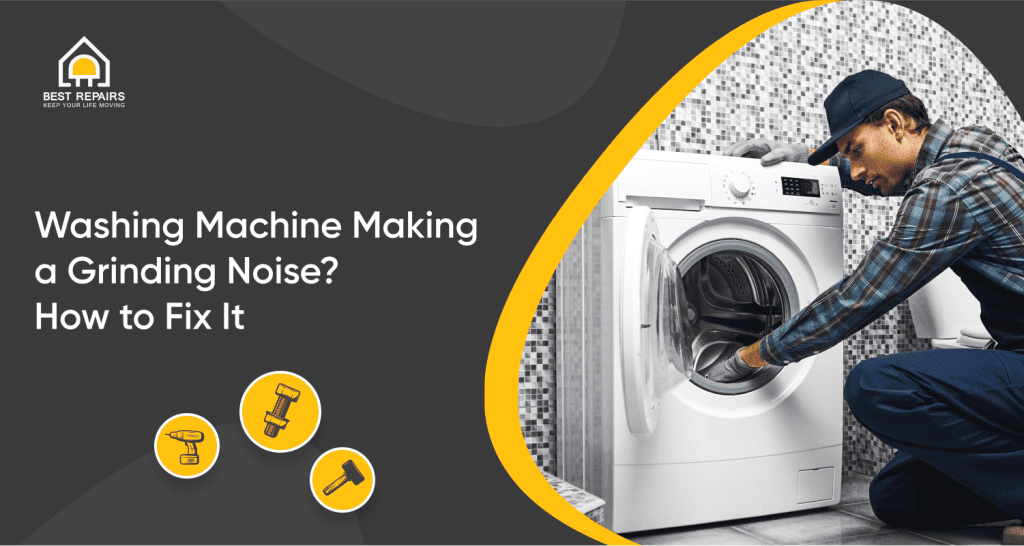
A washing machine grinding noise can be disruptive and alarming to your daily routine. Understanding these unusual noises is important for maintaining your appliance’s longevity and performance. Washing machine troubleshooting requires systematic identification of the underlying causes, worn components, whether it’s loose objects, or mechanical failures. Ignoring these grinding sounds can lead to costly repairs, complete appliance failure, or water damage.
In this complete guide, we’ll help you in diagnosing and addressing these issues, restoring your machine’s quiet operation, and making sure reliable performance for years to come.
What causes a Washing Machine Grinding Sound?
Loose Objects in the Drum
Small items like coins, screws, buttons, or bobby pins can become trapped between the drum and outer tub, creating metallic grinding sounds during operation. These foreign objects work their way into crevices during the wash cycle, causing intermittent noise that becomes more pronounced during spinning phases. Regular pocket checks before loading laundry can prevent this common issue affecting both top-loading and front-loading machines.
Worn Drive Belt
A deteriorating drive belt may slip, crack, or become loose over time, leading to grinding or squealing noises. When the belt fails to maintain proper tension, it struggles to transfer power effectively from the motor to the drum, resulting in irregular rotation and unusual sounds. Belt wear accelerates due to frequent use, exposure to moisture, and normal aging of rubber components.
Faulty Motor Coupling
Direct-drive washing machines rely on motor couplings to connect the motor shaft to the transmission. These plastic or rubber components can wear out, crack, or break completely, disrupting smooth power transfer and creating grinding noises as the motor struggles to rotate the drum. Motor coupling failure often results from overloading the machine, unbalanced loads, or normal wear over time.
Clogged Pump or Drainage System
Foreign objects, lint buildup, or debris can obstruct the drain pump, causing washer grinding during cycle operations. When the pump works harder to overcome blockages, it produces unusual grinding or humming sounds, particularly noticeable during drain cycles. Common culprits include small socks, hair ties, and accumulated lint that restricts water flow.
Read Also:- Why Is My Washing Machine Not Getting Water: Solution for Sydney Homes
Broken Suspension Rods or Springs
Suspension components maintain drum balance and absorb vibrations during operation. When these rods or springs break, wear out, or become misaligned, the drum can shift excessively, creating grinding sounds as it contacts other internal components during spinning. Failed suspension systems also cause excessive machine movement and potential damage to the washer’s cabinet.
Worn Bearings
Drum bearings support smooth rotation and bear the weight of wet laundry. When bearings deteriorate due to age, water damage, or excessive wear, they produce distinctive grinding noises accompanied by increased vibration and potential drum wobbling. Washing machine noise when spinning is commonly caused by bearing failure, which often starts gradually with minor noise that progressively worsens over time.
Gearbox or Transmission Issues
The transmission or gearbox controls drum rotation speed and direction. Internal gear wear, component failures, and oil leaks can create grinding noises as the mechanism struggles to operate properly, often resulting in poor wash performance. These issues often require complete transmission replacement due to repair complexity.

How to Fix Grinding Noise in a Washing Machine?
Step-1 Inspect the Drum and Agitator
Begin your washing machine troubleshooting by ensuring complete electrical disconnection for safety. Remove all laundry and manually rotate the drum slowly, listening for scraping or grinding sounds. Check thoroughly around the agitator base and drum edges for trapped objects like coins, jewelry, or clothing items that may have worked loose. Use a flashlight to inspect drum holes and crevices where small items commonly lodge. Having trouble with your washing machine drum? Reach out to Best Repairs experts in reliable washing machine repair services.
Step-2 Check the Drive Belt
Access the drive belt by removing the washer’s rear or bottom panel, depending on your model. Examine the belt carefully for cracks, fraying, glazing, or excessive looseness. A properly tensioned belt should have slight give when pressed, but shouldn’t slip easily off the pulleys. Look if there are any signs of stretching and check pulley alignment to make sure they’re not worn or damaged.
Step-3 Examine the Motor Coupling
Locate the motor coupling between the transmission and motor, typically found beneath the machine. Look for visible cracks, missing pieces, or complete separation of the coupling components. Remove the coupling carefully and inspect all rubber or plastic elements for deterioration.
Step-4 Clean the Pump and Drainage System
Access the drain pump, usually located at the front bottom of the machine behind a removable panel. Carefully remove any visible debris, lint, or foreign objects from the pump housing and impeller. Check the drain hose properly for blockages or kinks that might cause back pressure. Inspect the pump’s impeller for damage or worn blades that could create grinding noises.
Step-5 Verify the Suspension Rods or Springs
At this step, inspect all the suspension components for damage, wear, or rust. Look for bent rods, loose mounting points, or stretched springs. These components should maintain consistent tension and alignment to prevent excessive drum movement during operation. Check mounting brackets for cracks or looseness that could affect suspension performance.
Step-6 Inspect the Bearings
Examine the drum bearings by checking for play in the drum movement and listening for grinding sounds when rotating manually. Washer making grinding noise during spinning often indicates bearing failure, which may require professional replacement due to complexity. Test for bearing wear by lifting the drum slightly and feeling for excessive movement.
Step-7 Evaluate the Gearbox or Transmission
Check around the transmission for oil leaks, unusual noises when manually rotating the drum, or visible damage to external components. Internal transmission issues typically require professional diagnosis and repair due to the complexity involved. Inspect transmission mounting bolts for looseness that could cause misalignment and grinding.
Professional Repair Considerations
When to Seek Expert Help
Front-loader making grinding noise or persistent sounds after troubleshooting indicates complex internal issues requiring professional attention. If your DIY washing machine grinding noise fix attempts haven’t resolved the problem, or if you discover significant component damage, consult qualified technicians from reliable repair service providers like Best Repairs, who will prevent further damage and ensure proper repair.
Safety and Warranty Considerations
Trying to repair beyond basic maintenance can void warranties and create safety hazards. Professional services like appliance repairs in Sydney have specialized tools, genuine parts, and expertise to diagnose complex issues accurately while maintaining safety standards.
Washing Machine Grinding Noise Preventive Maintenance Tips
Regular maintenance prevents many grinding noise issues and extends the lifespan of your washing machine. Following these essential preventive measures can save you from costly repairs and make sure smooth operation:
- Empty pockets completely before washing to prevent foreign objects like coins, screws, or small items from entering the drum mechanism and causing grinding noises during operation.
- Use appropriate detergent amounts as specified by the manufacturer, since excessive suds can strain internal components, create unusual noises, and lead to premature wear of moving parts.
- Run monthly cleaning cycles with washing machine cleaner or white vinegar to remove soap residue and mineral deposits that can affect moving parts and create grinding sounds over time.
- Schedule periodic inspections of belts, hoses, and moving components quarterly to catch wear before it becomes problematic and requires expensive repairs or replacement.
Conclusion
Addressing grinding noises through systematic washing machine troubleshooting can save a lot of time, money, and inconvenience. Regular maintenance combined with immediate attention to unusual sounds ensures reliable appliance performance and extends operational life.
Many issues can be resolved through careful DIY troubleshooting, but complex problems involving transmissions, bearings, or electrical components require professional expertise. Whether you need routine maintenance or major repairs, service like appliance installations in Sydney by Best Repairs provides complete solutions to keep your washing machine operating efficiently for years to come.