Skip to content



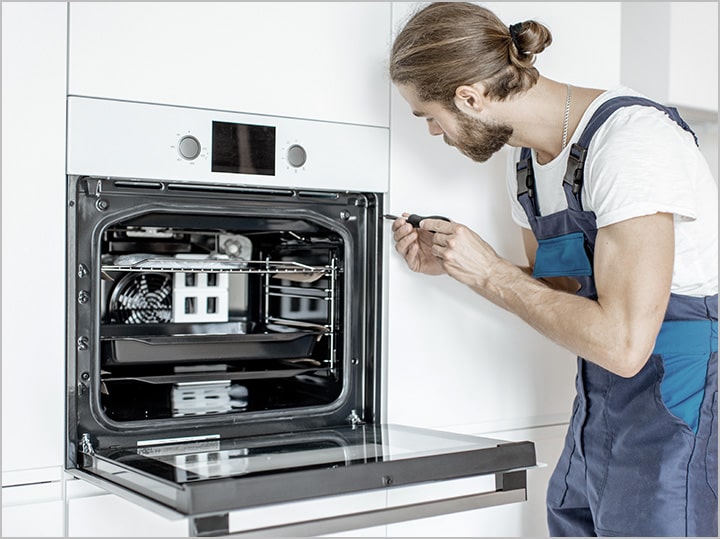
Ovens can develop different faults over time, from heating problems and inaccurate temperatures to unusual noises, faulty fans and door issues. Some problems may be caused by a worn component, while others can result from electrical faults, incorrect settings or normal wear and tear. Understanding common oven faults can help you recognise the warning signs and decide when an appliance needs professional attention. In this guide, we explain the symptoms, possible causes and practical solutions for some of the most common oven problems.
What Are Oven Faults?
Oven faults are problems that prevent an oven from operating normally or producing consistent cooking results. A fault may affect the heating system, temperature control, fan, door, lighting, display or electrical components.
Common signs include:
- The oven is not heating
- Food is cooking unevenly
- The oven temperature is inaccurate
- The fan is not working
- The oven takes too long to cook food
- The door does not close properly
- The oven keeps switching off
- The display is not working
- Unusual noises or smells are present
Identifying the symptoms can provide useful information about what may be causing the problem.
Oven Not Heating
One of the most noticeable oven faults is when the appliance turns on but does not heat properly.
Possible causes
A lack of heat may be caused by:
- A failed heating element
- A faulty temperature sensor
- A damaged thermostat
- Electrical problems
- A defective control board
- An incorrect cooking function
What to check
Make sure the oven is receiving power and that the correct cooking function and temperature have been selected. Allow the oven to preheat and check whether it produces heat.
If the oven remains cold or only produces limited heat, an internal component may need to be inspected by a qualified technician.
Oven Temperature Is Incorrect
An oven may heat up but still fail to maintain the selected temperature. This can result in food being undercooked, overcooked or burnt.
Possible causes
Temperature problems can occur because of:
- A faulty thermostat
- A damaged temperature sensor
- Heating element problems
- Control-board faults
- Poor door sealing
Solution
Check that the temperature setting is correct and that the door closes completely. If cooking temperatures remain inconsistent, professional diagnosis may be necessary to determine whether a sensor, thermostat or another component is faulty.
Oven Fan Not Working
Many modern ovens use a fan to distribute heat around the cooking cavity. A faulty fan can cause uneven cooking and longer cooking times.
Symptoms of a fan fault
You may notice:
- The fan does not spin
- Food cooks unevenly
- Cooking takes longer
- Unusual fan noises
- The oven becomes hotter in some areas than others
Possible causes
The fan problem may be related to a damaged motor, electrical connection, control component or another internal part.
After switching the oven off and allowing it to cool, check for any obvious obstruction around the fan. If the fan still does not operate, professional inspection may be required.
Oven Door Not Closing Properly
A properly closing oven door helps retain heat and maintain consistent cooking temperatures. A damaged door can therefore affect the oven’s performance.
Common causes
An oven door may fail to close because of:
- Worn hinges
- A damaged door seal
- Misalignment
- Broken door components
- Physical damage
Solution
Inspect the seal for visible tears, gaps or loose sections. Do not force the door closed if the hinges or frame appear damaged.
A technician can inspect the door mechanism and determine whether the seal, hinges or another component needs attention.
Oven Taking Too Long to Cook
If meals suddenly take longer to cook than they normally do, the oven may not be reaching the correct temperature.
Possible causes
This can be associated with:
- Weak heating elements
- Temperature sensor problems
- Thermostat faults
- Fan problems
- Poor door sealing
- Electrical issues
Check the selected cooking mode and temperature first. If the oven consistently takes longer than before, it may require a professional assessment.
Oven Keeps Switching Off
An oven that repeatedly switches off during cooking should not be ignored.
Possible causes
Possible causes include:
- Overheating
- Faulty temperature sensors
- Electrical problems
- Control-board faults
- Power supply issues
If the oven switches off repeatedly, avoid continuously restarting it without identifying the cause. A professional technician can inspect the appliance and determine why it is shutting down.
Oven Display Not Working
A blank or malfunctioning display can prevent you from selecting cooking programs, setting temperatures or using the timer.
What can cause it?
Common causes include:
- Power supply problems
- A faulty control panel
- Damaged wiring
- Electronic control-board failure
- Internal electrical faults
Check the power supply and circuit breaker. If other appliances have power but the oven display remains blank, professional diagnosis may be required.
Oven Light Not Working
A failed oven light is generally less serious than a heating or electrical fault, but it can still make it difficult to monitor food while cooking.
The bulb may simply need replacing. If a correctly rated replacement bulb does not work, the problem could involve the light socket, wiring, switch or control system.
Always switch the appliance off and allow it to cool before attempting any basic inspection.
Oven Making Unusual Noises
Some noises are normal. Cooling fans, relays and other components can produce sounds during or after operation.
However, new or unusually loud noises may indicate a fault.
Common causes
Unusual sounds may come from:
- A worn fan motor
- Loose internal components
- A damaged fan blade
- Electrical components
- Cooling system problems
Grinding, rattling, buzzing or repeated unusual sounds should be investigated, especially when accompanied by heating or electrical problems.
Oven Producing Strange Smells
An unusual smell coming from an oven can have several causes.
A burning smell may result from food residue or grease, but it can also indicate an overheating electrical component. A plastic smell could occur if an unsuitable item has been left inside the oven.
If you notice smoke, sparks, burning electrical smells or another serious warning sign, stop using the appliance and seek professional assistance.
For gas ovens, a strong gas smell should be treated as an urgent safety issue. Follow appropriate gas-safety procedures and do not continue operating the appliance.
Oven Cooking Unevenly
Uneven cooking is another common oven fault. You may find that one side of a dish cooks faster than the other or that food is consistently undercooked in certain areas.
Possible causes
Uneven cooking can be related to:
- A faulty fan
- Heating element problems
- Incorrect temperature
- Temperature sensor faults
- Poor heat circulation
- Incorrect rack positioning
Before assuming there is an appliance fault, make sure the oven has been properly preheated and that food is positioned according to the manufacturer’s recommendations.
Oven Controls Not Responding
Buttons, touch controls or knobs that stop responding can make it difficult to operate the appliance.
The problem may involve the control panel, switches, wiring or electronic control board.
If only one control is affected, it may indicate a specific component problem. If the entire control panel stops responding, the fault may be electrical or electronic.
Avoid opening the control panel yourself unless you are suitably qualified to work with electrical appliances.
How to Troubleshoot Oven Faults Safely
Some basic checks can be carried out without opening the appliance.
Check the Power
Confirm that the oven has power and check whether a circuit breaker has tripped.
Check the Settings
Make sure the correct cooking function, temperature and timer settings have been selected.
Inspect the Door
Check whether the door closes properly and whether the seal has visible damage.
Keep the Oven Clean
Remove excessive food residue and grease from areas that can safely be cleaned according to the manufacturer’s instructions.
Allow the Appliance to Cool
If the oven has overheated, allow it to cool completely before checking whether it operates normally.
Never remove electrical covers or attempt to repair internal wiring, heating elements or control boards unless you are qualified to do so.
When Should You Stop Using an Oven?
Some oven faults require immediate attention. Stop using the appliance if you notice:
- Smoke from electrical components
- Sparks
- A burning electrical smell
- A damaged power cord
- Repeated circuit-breaker trips
- Severe overheating
- A strong gas smell
- Major physical damage
Continuing to use an appliance with a serious fault can increase the risk of further damage or create a safety hazard.
When Do Oven Faults Require Professional Help?
Simple issues such as incorrect settings or a failed light bulb may sometimes be resolved without professional assistance. More complicated faults involving heating elements, thermostats, sensors, fans, wiring or control boards generally require proper diagnosis.
A qualified technician can identify the underlying cause rather than replacing components unnecessarily.
If your oven has developed a persistent fault and you need professional assistance, you can contact our Oven Repairs Sydney service for professional diagnosis and repair solutions.
Repair or Replace a Faulty Oven?
Not every oven fault means the appliance needs to be replaced.
The decision usually depends on:
- The age of the oven
- The type of fault
- The cost of replacement parts
- The overall condition of the appliance
- Availability of spare parts
- Previous repair history
A relatively minor component fault may be worth repairing, while an older appliance with multiple major problems may make replacement a more practical option.
Professional diagnosis can help you understand the problem before making that decision.
Final Thoughts
Understanding common oven faults can help you recognise problems before they become more serious. Heating issues, inaccurate temperatures, fan problems, damaged doors, unusual noises and electrical symptoms can all indicate that an oven requires attention. Basic checks such as confirming the settings, checking the power supply and inspecting the door seal can help identify simple issues. However, internal electrical and gas-related faults should be handled by appropriately qualified professionals.
If an oven continues to perform poorly or develops a persistent fault, getting the underlying problem diagnosed can help restore safe and reliable operation.